
You Don't Need a Crime Center to Get Real-Time Campus Information
Real-time centers are reaching higher education, but a big budget isn't the entry ticket. Here is how campus law enforcement can get real-time information with the resources it already has.
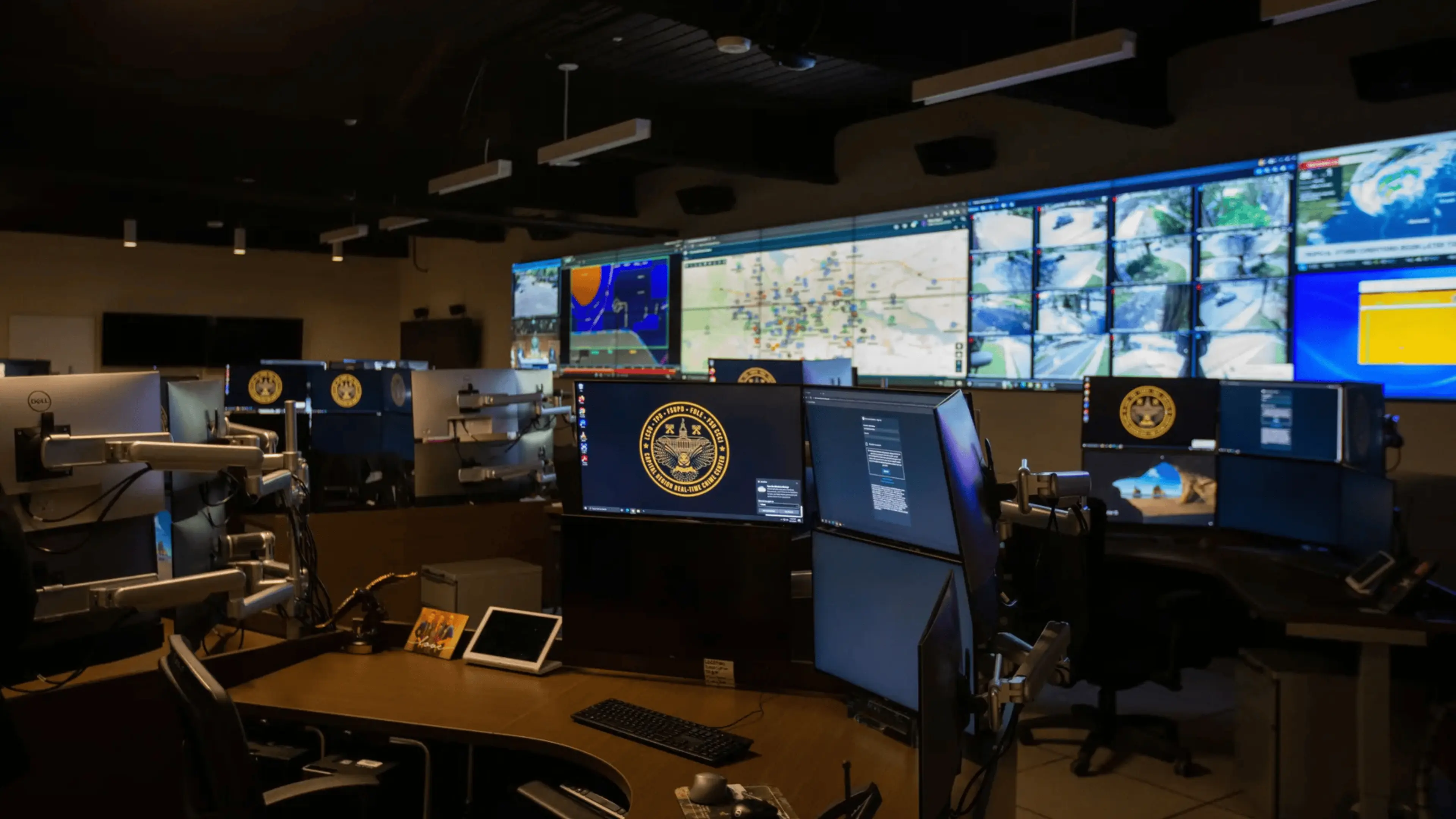
Every campus law enforcement leader wants the same thing: the right information, in front of the right person, at the moment it matters. Real-time crime centers (RTCCs) promise exactly that, and they are now beginning to appear in higher education. Yet for most institutions, the perceived cost and complexity make one feel out of reach, something reserved for schools with large budgets or access to grant funding.
My point of view is simple: you do not need to build a showpiece to get the benefits. The real question is how to enable your team to access the right information at the right time, and there are far more ways to answer it than most people assume.
Why Real-Time Information Centers Beat Real-Time Crime Centers
From here on, I will call these facilities Real-time Information Centers, or RTICs, and I recommend you consider the same shift. Labeling your center a crime center signals to the community that your focus is strictly on crime, which can inadvertently suggest a focus on the demographics involved in those crimes.
The second reason is accuracy. These centers support far more than crime-related events. They assist with missing persons, car accidents, medical emergencies, Clery compliance, emergency planning, and more. A name like Real-time Information Center, or even Security Operations Center (SOC), describes the work honestly and avoids unnecessary baggage.
The Cinematic Control Room Is Optional
When you picture an RTIC, a few familiar images probably come to mind: dim lighting, a giant LED logo on the wall, an oversized conference table with leather chairs, and fancy dispatcher stations surrounded by monitors and large TVs. I have toured quite a few centers and can say without hesitation that those setups are cool. I will also be the first to say that none of it is necessary.
Go back to the purpose of an RTIC: delivering the information you need, when you need it. None of those flashy features achieves that directly. Extra monitors or TVs can help display more cameras or alerts, but what really matters is having the right software, a couple of monitors, and someone who knows how to use them. With those ingredients, even a janitor's closet can become a fully functional real-time information center.
A photo from Alabama A&M University's center shows what a full build can look like, with a video wall and branded banner above multiple workstations. Look closer at the workstation screens, though, and the value is in the software: a campus map with camera locations, a wall of camera views, a workflow builder, and a network health check. The wall makes an impression, but the information on the desks does the work.
That is why your first question shouldn't be how do we build an RTIC. It should be how do we enable our team to access the right information at the right time. If the answer is funding a brand-new center with all the bells and whistles, great. If it means upgrading the software in your current dispatch room, that is great too.
How Campus Needs Differ From City and County Centers
To see why campuses face a unique challenge, it helps to look at what traditional law enforcement centers do.
State and county centers
These facilities focus heavily on supporting surrounding agencies by collecting and disseminating information. They often analyze crime trends, compile data such as gun violence statistics, and develop programs that encourage collaboration between departments.
City and town centers
These centers are more tactical, delivering real-time information directly to officers. One of their main tools is license plate recognition (LPR) cameras, with some centers using 100 or more across their jurisdiction. Interestingly, many don't have traditional context cameras, the ones viewing sidewalks, roads, and interiors, and if they do, the numbers are often modest, perhaps a few hundred. Major city centers are the exception.
Software integration is another key element. These centers pull in cameras from outside entities like K-12 schools, residential properties, hospitals, or municipal buildings. Importantly, they don't manage day-to-day incidents on those third-party cameras. They simply access them when needed to solve an incident.
Colleges and universities
Higher education is a different story. Campus law enforcement must manage a much broader array of context cameras, covering indoor and outdoor spaces across countless buildings. On top of that, you oversee access control, panic buttons, blue lights, mass notifications, student shuttles, and more. Simply put, you are juggling far more than you are often given credit for.
Two Hurdles Between Campus Police and Real-Time Information
Based on my experience, two major hurdles stand between campus teams and the information they need in real time.
The first is spending countless hours sifting through an extensive network of context cameras. The second is losing time trying to manage siloed systems that don't communicate with each other. Neither problem is solved by a bigger video wall or a nicer conference table.
Our AI Glue platform was built to address both. It unifies your systems and layers AI on top to help you quickly surface relevant information. That speed leads to both improved safety and cost savings.
Are there other platforms that can help? Of course. But many of them still require your team to pour in significant time and resources. MIDL was developed within higher education environments, and it continues to empower campus law enforcement with solutions tailored to the unique demands of campus safety.
Key Takeaways
Name it for what it does: Real-time Information Center or SOC signals a broader mission than crime alone.
Skip the spectacle: the right software, a couple of monitors, and a trained operator matter more than a showpiece room.
Ask the better question: how do we enable our team to access the right information at the right time?
Campuses are unique: you manage far more context cameras and connected systems than most city or county centers.
Unify first: reducing camera sifting and siloed systems is where speed, safety, and savings come from.
Start With the Information, Not the Room
Whether you are planning a dedicated center or simply upgrading your current dispatch room, the goal is the same: get your team the information they need, faster. To see how AI Glue can unify your campus systems and surface what matters, get a hold of us here: https://www.gomidl.com/contact